
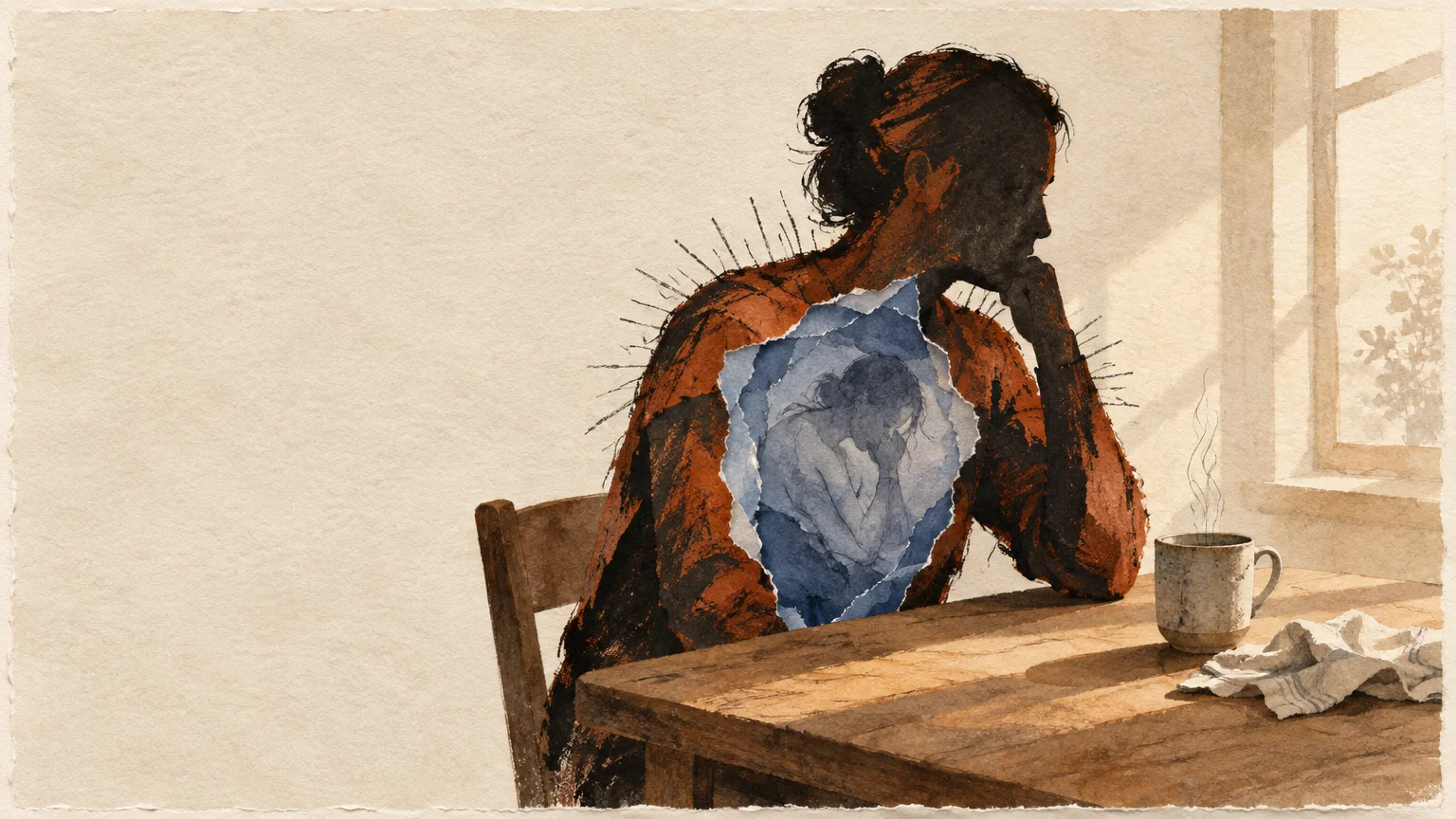
Snapping at someone over a half-loaded dishwasher, then feeling embarrassed an hour later at how big the reaction was, is a common experience. When it happens most days, research points less to a fixed short temper and more to whatever is lowering the threshold.
The usual drivers are sustained stress, poor sleep or pain, feelings that get pushed down until they spill over, and conditions such as depression, anxiety and PTSD, in which irritability is a recognized symptom. Most of these can be changed.
In this article
- Ordinary anger versus a fuse that never resets
- Stress and buried feelings behind a short fuse
- A body and mind running on empty
- Feelings that are harder to show
- A backlog that never gets cleared
- Feeling stuck
- Learned patterns and temperament
- Why it lands on the people closest
- Venting tends to keep anger going
- Ways to lower the baseline, not just the flare-ups
- Irritability as a hidden sign of depression or PTSD
Ordinary anger versus a fuse that never resets
Anger is a normal response to threat, unfairness or a goal being blocked. It can flag a boundary being crossed or a problem that needs fixing, which is why the aim is rarely to stop feeling it altogether.
The signal worth noticing is the pattern: irritation as the default state rather than a reaction, flare-ups far out of proportion to the trigger, and anger that lingers for hours or keeps damaging the same relationships.
Each flare sets off a stress response. Heart rate and blood pressure rise and adrenaline and noradrenaline surge, which is useful in a real emergency but wearing when it fires several times a day over traffic and emails.
Sustained stress is linked to high blood pressure, heart problems and weaker immune function. The cost of near-constant anger is physical as well as relational.
Stress and buried feelings behind a short fuse
Several of these often overlap, so it helps to look at the whole picture rather than searching for one cause.
A body and mind running on empty
Stress weakens the brain’s capacity for emotional regulation, so a trigger that barely registers on a calm day can feel enormous during a hard stretch.
Financial pressure, a demanding job or caregiving can all lower that threshold without anything changing in who you are.
The mundane matters too. Short sleep, untreated pain, hunger and hormonal shifts all reduce frustration tolerance, and fixing them can do more than any amount of reflecting on the anger itself.
Feelings that are harder to show
Many therapists describe anger as a cover for something more exposed, such as hurt, shame, fear or rejection. Anger feels active and protective, while those feelings feel helpless, so anger can become the default.
A useful clue is anger that flares in moments that also involve embarrassment, being dismissed or being left out.
A backlog that never gets cleared
Anger that is routinely swallowed does not disappear. Someone can seem calm for weeks and then explode over something minor, because the trigger was the last addition to a pile rather than the real cause.
Feeling stuck
Anger often grows where a person feels blocked from changing something that matters, such as a stalled job or a relationship issue raised many times without result.
In that situation the irritation tends to persist until the circumstances shift or some real room to act appears.
Learned patterns and temperament
People who grew up where conflict meant shouting or slammed doors often absorbed that as the normal way to express frustration. A learned pattern can be relearned with deliberate practice.
Some differences in irritability appear early in life and probably have a genetic component. A lower starting threshold is not a moral failing, but it may mean needing more consistent strategies than other people do.
Why it lands on the people closest
Many people are most irritable at home. Part of the reason is safety: raw emotion feels less risky around people unlikely to leave over it than around a boss or a stranger.
That explains the pattern without excusing it, since partners, children and close friends absorb the cost again and again.
Venting tends to keep anger going
A popular belief holds that letting anger out by yelling or hitting a pillow releases it. Experimental research has repeatedly found the opposite: aggressive expression tends to keep anger going and makes the same reaction more likely next time.
A 2024 meta-analysis of experiments found that arousal-lowering activities such as slow breathing, mindfulness and progressive muscle relaxation reduced anger, while arousal-raising activities did not reliably help.
Bottling it up does not work well either. A 2025 meta-analysis in Scientific Reports found that suppression and avoidance were associated with higher anger, while acceptance and cognitive reappraisal were associated with lower anger.
| Strategy | What it looks like | What research shows it does to anger |
|---|---|---|
| Venting or aggression | Yelling, slamming doors, hitting a pillow, replaying the grievance out loud | Tends to sustain or intensify anger and reinforces the habit of reacting that way |
| Suppression | Clenching your jaw, insisting you are fine, pushing the feeling away | Linked to higher anger and more internal stress; the feeling often resurfaces later |
| Cognitive reappraisal | Asking whether there is a less threatening reading of what happened | Linked to lower anger; does not require dismissing a real grievance |
| Physiological pause | Slow breathing, stepping away, waiting before replying | Arousal-lowering techniques reduce anger in experiments; the initial surge has time to settle |
Ways to lower the baseline, not just the flare-ups
The approaches with the best support work on two levels: the moment of anger itself, and the conditions that keep the fuse short.
- Pause before acting. A few slow breaths, a short walk or a fixed count gives the surge time to settle before you reply. Practicing paced breathing in calm moments, for example with a free breathing timer, makes it easier to use under pressure.
- Name what sits underneath. Ask what triggered the reaction and whether hurt, fear or feeling dismissed is part of it. Putting a more specific name to the feeling often takes some heat out of it.
- Check the interpretation. Reappraisal means asking whether there is another reading of what happened and whether the intensity matches the event. It is a core skill in many CBT exercises people practice at home.
- Look at the backlog. If a small incident produced a big reaction, ask what has been piling up. Raising issues earlier, in calmer moments, keeps the pile smaller.
- Repair the basics. Protect sleep, eat regularly and get pain treated. Regular exercise lowers baseline stress and improves sleep, though a hard workout in the middle of a rage is not a reliable way to calm down.
- Chip away at the main stressor. Even partial changes to a chronic source of stress tend to do more over time than techniques aimed only at individual angry moments.
These steps can make a real difference, but they are not a substitute for treatment when a health condition is driving the anger.
Irritability as a hidden sign of depression or PTSD
Irritability is a listed symptom of both depression and generalized anxiety disorder. In some people, often men, it is more obvious than sadness or worry, so the underlying condition goes unrecognized.
Irritable behavior and angry outbursts are also part of PTSD, where anger after trauma often connects to feeling constantly on guard.
If the anger began or worsened after a frightening event, it may help to read how trauma changes the brain’s threat response and to mention that history when seeking help.
A physical check is worthwhile too. Thyroid problems, sleep disorders, chronic pain, hormonal changes and some medications can all raise irritability, especially when the anger is a clear change from how you usually are.
DSM-5-TR also describes intermittent explosive disorder: repeated, impulsive outbursts of verbal or physical aggression far out of proportion to the trigger. Only a clinician can diagnose it, after ruling out other explanations.
Talk to a primary care doctor or therapist if anger feels out of proportion most days, is costing relationships or work, or comes with low mood, worry, heavy drinking or trauma symptoms.
Seek help promptly if anger has led to threats, breaking things or hurting someone, since a professional can address both the causes and the safety concerns.
Structured anger management, usually built on cognitive behavioral therapy with relaxation and communication skills training, is a standard option. It is not reserved for severe cases; anyone whose anger has become a pattern they want to change can use it.