
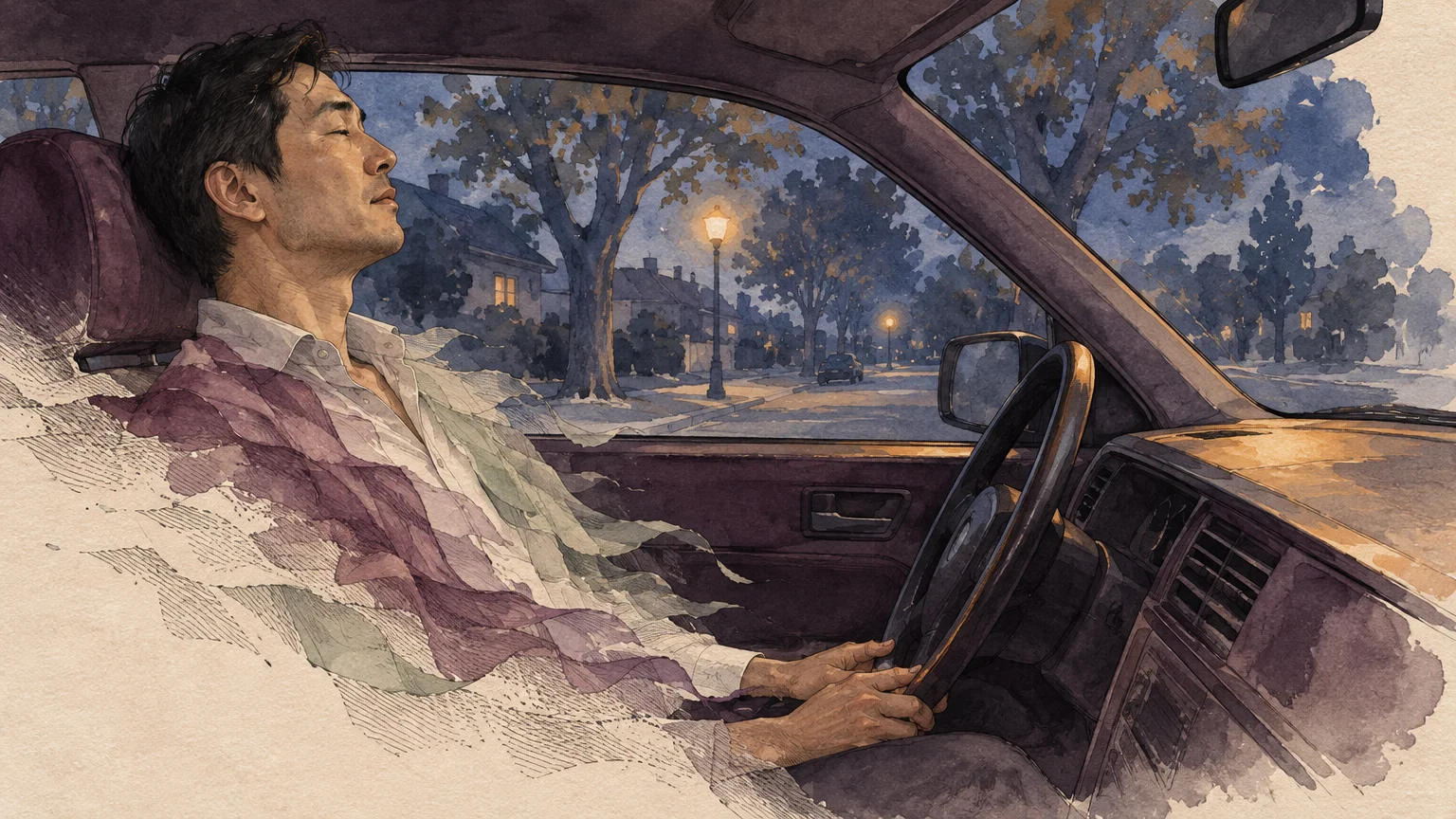
Someone can hold down a demanding job, laugh at the right moments at a colleague’s leaving drinks, then spend the whole weekend alone with the curtains drawn to recover. To everyone around them, nothing looks wrong.
That gap between how things look and how they feel is one of the main reasons autism goes unrecognized until adulthood. Many people now receive a first diagnosis in their thirties, forties or later, after years of being called shy, anxious or difficult.
In this article
- Signs that pass for personality in adults
- Socializing that costs more than it seems
- Interests with unusual depth
- Senses turned up, or down
- Change, routine and hidden stimming
- Why autism stays hidden for decades
- Masking
- Criteria built around boys
- The delay in numbers
- Traits present since early childhood
- No medication for autism itself
- Making sense of a late diagnosis
- Self-recognition is a start, not a diagnosis
- Supporting a partner, friend or relative
Signs that pass for personality in adults
Autism spectrum disorder involves two clusters of traits: differences in social communication and interaction, and restricted or repetitive patterns of behavior, interests or sensory responses. In adults, both are usually quieter and better hidden than the childhood picture most people carry.
Socializing that costs more than it seems
Many autistic adults are not withdrawn or uninterested in people. They may socialize often and even look skilled at it, while finding each interaction far more effortful than others do and needing long recovery time, even after an evening that went well.
Some describe conversation as constant translation: consciously reading tone, deciding when to look at someone’s eyes and choosing what to say, where others seem to do it automatically. Structured settings, like a meeting with an agenda, often feel easier than parties or small talk.
Interests with unusual depth
An intense, sustained focus on a particular subject, well beyond an ordinary hobby, often continues from childhood into adult life. Because it may be channeled into a career or admired as passion, few people connect it to autism.
Senses turned up, or down
Strong reactions to certain sounds, lights, textures, smells or crowded spaces are a core feature of autism, not a matter of fussiness. Some people are under-responsive instead, noticing pain, heat or cold less than others do.
Change, routine and hidden stimming
Unexpected changes to plans can cause genuine distress rather than mild irritation, and many adults build firm routines or plan heavily to avoid surprises. The distress may only show later, at home, as shutdown or exhaustion.
Repetitive movements, or stimming, that helped regulate feelings in childhood usually persist into adulthood. They are often shrunk into less visible forms: a jiggling foot, an object turned over in a pocket, a phrase repeated silently.
The contrast with the childhood stereotype is often sharpest in five areas.
| Trait | Stereotypical childhood presentation | Masked adult presentation |
|---|---|---|
| Eye contact | Avoids looking at people’s eyes | Makes eye contact by deliberate rule; timing or intensity may feel slightly off |
| Socializing | Seems withdrawn or uninterested in other children | Socializes using rehearsed scripts and mirroring, then needs long recovery alone |
| Special interests | Talks at length about one topic regardless of the listener | Channels deep focus into work or a hobby that reads as ordinary passion |
| Stimming | Visible hand flapping or rocking | Foot tapping, fidgeting with an object or other small, private movements |
| Routine changes | Obvious meltdown when plans change | Holds it together in public, then shuts down or crashes later; plans heavily to avoid surprises |
Beneath many of these traits, late-diagnosed adults often describe a lifelong sense of being subtly different without knowing why, a feeling put down for years to introversion, anxiety or simply being odd.
Why autism stays hidden for decades
Autism is a lifelong neurodevelopmental condition, present from early childhood even when it is first identified at 40. Research points to genes acting together with environmental influences on early development, and having an autistic sibling raises the likelihood.
The World Health Organization estimates that about 1 in 100 children worldwide has autism, and many adults alive today were never identified as children.
Masking
Masking, sometimes called camouflaging, means hiding autistic traits and copying neurotypical behavior to fit in: forcing eye contact, rehearsing scripts, holding back stimming, or mirroring others’ tone and body language. It often begins in childhood, long before a person knows why socializing feels so hard.
Years of skilled masking can hide traits even from trained clinicians in a single appointment. Adults with higher intellectual ability appear more likely to develop sophisticated strategies, which makes their autism harder, not easier, to spot.
Masking has a cost. Research on camouflaging links sustained masking to anxiety, exhaustion and depression.
Many late-diagnosed adults describe autistic burnout, a period of deep fatigue and reduced ability to cope that overlaps with, but is not the same as, emotional burnout from work or caregiving. Burnout is often the crisis that finally prompts an assessment.
Criteria built around boys
Early autism research focused heavily on boys, and the tools developed from it can miss presentations that look different. Researchers have proposed a “female phenotype,” more common in but not exclusive to women, with stronger camouflaging and interests that seem ordinary for age and gender.
A study of gender differences in misdiagnosis and delayed diagnosis among adults with autism found that women and men followed different routes to an accurate diagnosis. Men with milder or atypical traits are missed too, so gender assumptions slow recognition for everyone.
Masking is not unique to autism. It also delays recognition of ADHD, as described in ADHD in Women: Symptoms, Masking and Diagnosis, and the two conditions often occur together.
The delay in numbers
In a study of adults diagnosed with autism (Fusar-Poli et al., 2020), the median age at first mental health evaluation was 13 and the median age at autism diagnosis was 23, with a median individual delay of 11 years between the two.
The figures do not subtract neatly because the 11 years is the middle value of each person’s own delay, not the difference between the two group medians.
In the same study, about a third of participants had never received a psychiatric diagnosis before; the rest had been given at least one other diagnosis before autism was identified.
Traits present since early childhood
DSM-5-TR requires autistic traits to be present from early development, although they may not become obvious until social demands exceed a person’s capacities, or may be masked by learned strategies. That developmental thread is the main way clinicians separate autism from conditions that begin later.
Overlap runs both ways. Co-occurring conditions are very common in autism, with some lifetime estimates of 70% or higher, so autism can hide behind anxiety or depression, or a real co-occurring condition gets treated while the autism goes unnoticed.
- Social anxiety: the core problem is fear of being judged, and social ease often returns once fear fades. In autism, communication differences persist even when relaxed, though anxiety frequently sits alongside them.
- Depression: withdrawal and flat expression mark a change from a person’s usual self. In autism, social differences and less animated facial expression have been lifelong, though depression can co-occur.
- Borderline personality disorder: some adults, particularly women, receive this diagnosis before autism is recognized. In BPD, distress tends to center on fear of abandonment and an unstable sense of self; autistic meltdowns are more often triggered by sensory overload, change or social confusion.
- OCD: compulsions are driven by unwanted intrusive thoughts and feel distressing. Autistic routines and interests are usually soothing or enjoyable in themselves.
- ADHD: both can involve distractibility and social difficulty, and since DSM-5 in 2013 a person can be diagnosed with both.
- Psychosis or schizotypal traits: unusual social behavior or very literal thinking is sometimes misread this way, but autism itself does not cause hallucinations or delusions.
No medication for autism itself
There is no medication for autism itself, and NICE guidance on autism in adults advises against using medication to treat its core features. Support instead targets co-occurring conditions, daily functioning and work.
Anxiety and depression in autistic adults are treated with the same evidence-based therapies and medicines recommended for anyone, often adapted with more concrete language, written summaries and attention to sensory needs.
NICE also suggests group social learning programs and individual employment support for adults who want them.
Day-to-day strategies many autistic adults find useful include:
- building recovery time into the calendar after social events, rather than waiting until energy runs out
- sensory tools such as noise-canceling headphones, sunglasses, or quieter routes and seating
- asking for agendas, written instructions and advance notice of changes
- choosing settings and people where masking can safely be dropped
- requesting workplace accommodations, which the Americans with Disabilities Act in the US and the Equality Act 2010 in the UK can entitle employees to
These steps make life more manageable, but they are not a substitute for treatment when anxiety, depression or another condition is present.
Making sense of a late diagnosis
Many adults spend months rereading their past through a new lens. Researchers describe something close to identity reconstruction: relief at finally having an explanation, alongside grief for years spent without understanding or support.
Diagnosis can also end years of treatment aimed at the wrong condition. Many people say that meeting other autistic adults, through peer groups or autistic-led organizations, is among its most valuable results.
Self-recognition is a start, not a diagnosis
Recognizing these patterns in yourself is not a diagnosis. Clinically focused recommendations for diagnosing autism in adults support assessment by someone experienced with adult presentations, since clinicians without that experience are more likely to miss masked traits.
Screening questionnaires such as the AQ-10, which NICE suggests for adults, can indicate whether a full assessment is worthwhile but cannot confirm autism.
A thorough assessment draws on developmental history. Recollections from parents or siblings, school reports and old records help clinicians see traits from before masking set in, so gather what you can beforehand.
In the UK, the usual route is a GP referral to an adult autism service, often with long waits. In the US, a psychologist or psychiatrist usually carries out the assessment, and insurance coverage for adults varies, so check costs first.
Some adults seek diagnosis mainly for self-understanding; others need documentation for accommodations. Both are reasonable, and naming your reason at the first appointment helps shape the process.
Supporting a partner, friend or relative
Take the possibility seriously and avoid saying “you don’t seem autistic,” which usually just means the masking works. A successful career does not rule autism out either; it can make it harder to see.
Practical support tends to matter most: protecting recovery time, giving warning before plans change, and offering childhood memories if the person asks for help with their developmental history.